
Various Tests
Orthomolecular Medicine (Nutritional Therapy) and Supplement Consultation
In other words, obtaining the necessary nutrients based on proper knowledge is fundamental to creating a healthy and beautiful body and skin.
At our clinic, we not only utilize conventional therapeutic medications but also engage in prevention and treatment using nutrients, incorporating supplement therapy based on orthomolecular medicine (nutritional therapy).
Recommended for those who:
- Experience chronic fatigue
- Have unexplained health issues
- Want to understand their body’s condition
- Deplete nutrients through intense exercise
Orthomolecular medicine (nutritional therapy) is a treatment method that improves bodily functions and ameliorates pathological conditions by maintaining the body’s molecules (nutrients) in an optimal state.
Also known as “molecular orthomolecular medicine,” it is a discipline proposed by Dr. Linus Pauling of the United States, who received two Nobel Prizes.
In modern times, there has been a significant increase in people suffering from various non-specific complaints such as feeling unwell despite showing “no abnormalities” in health checkups or comprehensive medical examinations, difficulty recovering from fatigue, difficulty waking up in the morning, and frequent headaches.
For such individuals, nutritional deficiencies and imbalances in nutritional balance may be contributing factors.
At our clinic’s orthomolecular medicine practice, we conduct detailed analysis of blood test data to assess each individual’s nutritional status, determine the necessary nutrients and their optimal amounts (the ideal quantity of nutrients), and provide tailored prescriptions combining dietary guidance and medically developed supplements for each person.
[Notes for Testing]
※For those wishing to undergo blood tests, please fast for 8 hours prior to the test; drinking water is permitted thereafter. Please refrain from beverages containing caffeine.
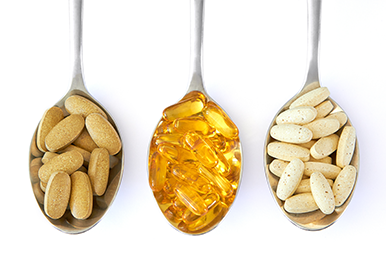
About Supplements
The supplements handled at our clinic are medical-grade products manufactured in GMP (Good Manufacturing Practice—standards for manufacturing and quality control of pharmaceuticals and quasi-drugs) compliant facilities, the same as pharmaceutical manufacturing, and are high-purity, high-quality supplements. All supplements are derived from natural ingredients rather than chemical synthesis, allowing for safe use.
While somewhat more expensive than supplements sold to the general public, they are characterized by an exceptionally high content of nutrients per tablet to enhance therapeutic effects. Additionally, nutrients other than the main ingredient are effectively formulated to improve absorption efficiency.
EpiClock Test
Recommended for those who:
- Want to take measures for anti-aging and extending healthy lifespan
- Want to confirm future health risks and aging speed
- Are considering reviewing lifestyle habits and health management
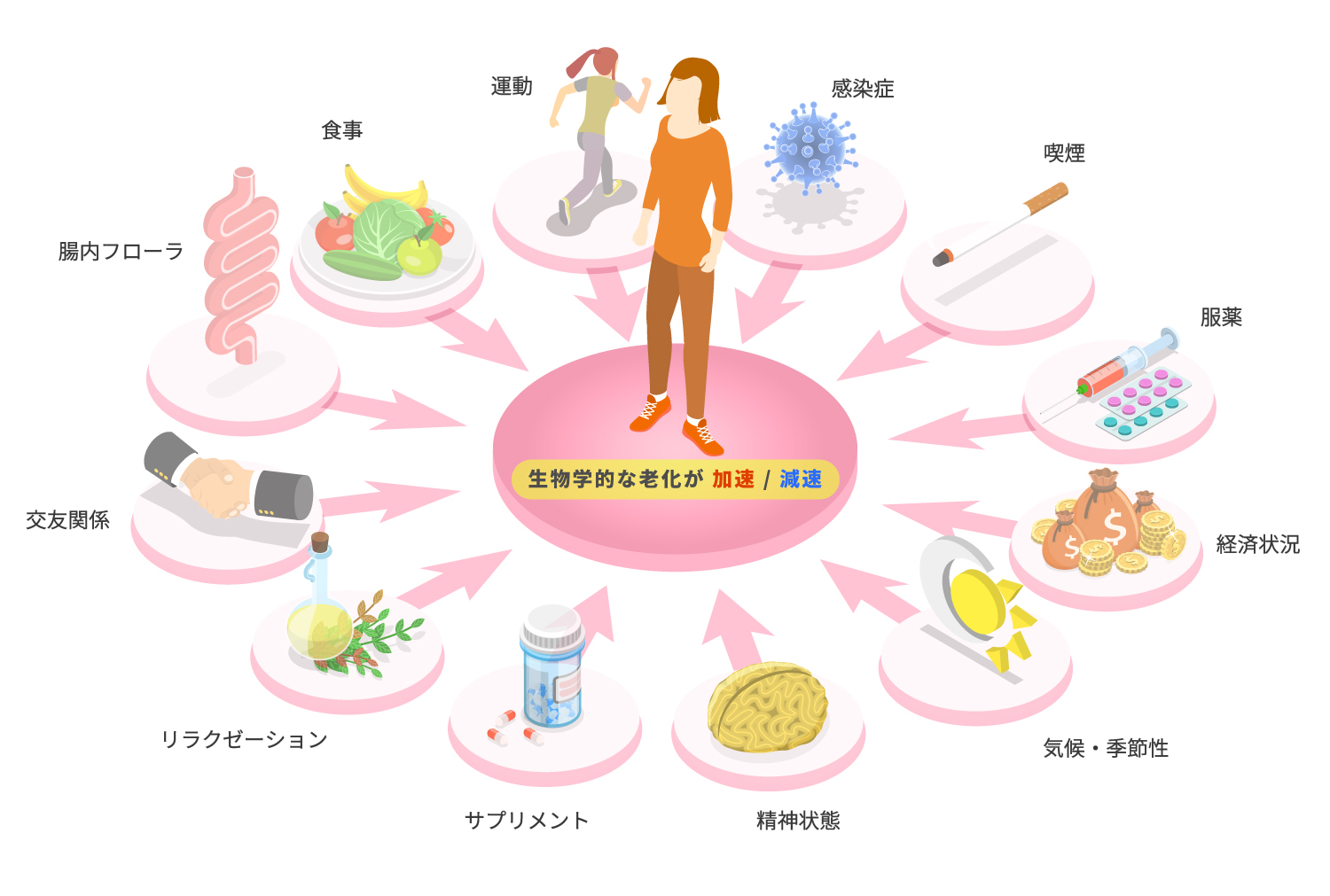
Biological age is the age that indicates the state of cells and tissues within the body. In other words, even at the same chronological age, the body’s age differs depending on health status and lifestyle habits. A younger biological age indicates better health and slower progression of aging. Conversely, if biological age is high, it may be necessary to review lifestyle habits and health management.
What is the Epigenetic Clock?
Genes are like blueprints for our bodies, containing information that determines our appearance, constitution, and even some health conditions. However, how these genes function or remain dormant is controlled by a phenomenon called “epigenetics.” The collective term for the factors underlying epigenetics is called the “epigenome.”
What is the EpiClock Test?
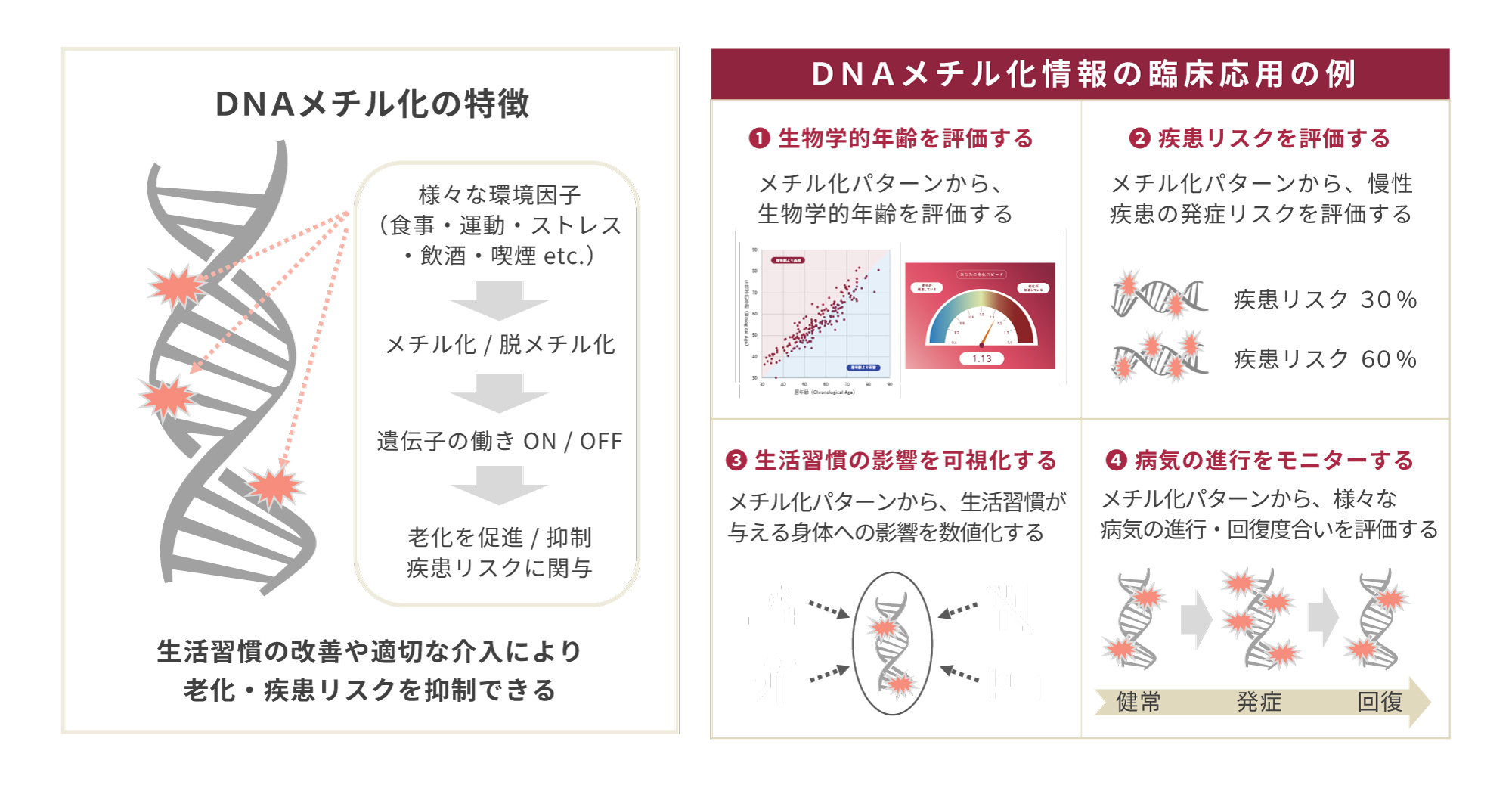
EpiClock analyzes the methylation status of DNA to:
- Biological age (the body’s true age) is measured by comparing it with chronological age to assess the internal age of the body.
- Analysis of aging speed evaluates the progression of aging from DNA methylation patterns.
- Health risk assessment predicts risks such as cancer, chronic inflammation, and metabolic abnormalities.
What is DNA Methylation?
DNA methylation refers to the addition of methyl groups to specific regions on DNA called methylation sites. Humans are thought to have approximately 30 million such methylation sites. The methylation and demethylation of these sites regulate gene function.
Testing Process
- STEP 1: Counseling and Explanation
- STEP 2: Blood Collection (approximately 10 minutes)
- STEP 3: Result Analysis (6–8 weeks)
- STEP 4: Result Report
Gut Microbiome Test (Intestinal Microbiota Test)
Recommended for those who:
- Experience chronic constipation
- Are prone to abdominal pain or diarrhea
- Have skin problems
- Have conditions such as diabetes or allergies
Our intestines are home to hundreds of species and over 100 trillion resident bacteria. When viewed under a microscope, they spread out like a flower garden, which is why they are called “gut flora” (flora = flower garden).
Gut flora is classified into “beneficial bacteria” that have positive effects on our bodies, “harmful bacteria” that have negative effects, and “opportunistic bacteria” that belong to neither category and side with whichever is dominant in the intestines—beneficial or harmful bacteria.
When diet and living environment become disrupted due to high-fat diets, overeating and excessive drinking, alcohol consumption, sleep deprivation, stress, etc., harmful bacteria such as Clostridium perfringens proliferate, intestinal putrefaction progresses, foul-smelling gases and toxins are produced, and this is believed to cause physical discomfort and illness.
In healthy intestines, beneficial bacteria represented by lactic acid bacteria, bifidobacteria, and butyric acid bacteria suppress the proliferation of harmful bacteria, serve as energy for the intestines, promote peristaltic movement, and synthesize lactic acid and short-chain fatty acids that activate immune cells.
In recent years, research has revealed that “gut flora” is closely related to our health, and it has become clear that disruption of gut flora increases the risk of various diseases (enteritis, colon cancer, breast cancer, obesity, allergies, arteriosclerosis, diabetes, autism, etc.).
Intestinal bacteria are closely related to the brain and skin, a relationship called “gut-brain-skin axis.”
Imbalances in intestinal bacteria can cause acne, rough skin, sensitive skin, and oily skin, or lead to decreased skin immune function, resulting in exacerbation of allergic diseases such as atopic dermatitis and inflammatory diseases.
For healthy and beautiful skin, it is important to understand your own gut flora balance and make lifestyle improvements suited to yourself.
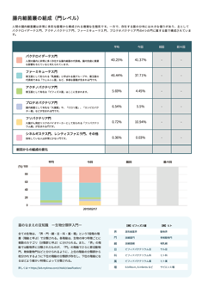
What the Gut Microbiome Test Reveals
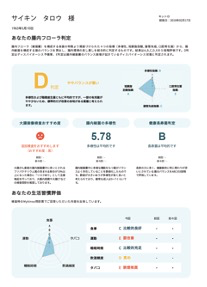
- Gut flora assessment (diversity, short-chain fatty acids, intestinal immunity, oral resident bacteria)
- Recommendation level for colon imaging examination
- Healthy longevity bacteria assessment
- Proportions of major bacteria in gut flora (bifidobacteria, lactic acid-producing bacteria, etc.)
- Diet and beauty-related information (tendency to gain weight, lean bacteria, equol-producing bacteria)
- Lifestyle improvement points
- Advisory comments from registered dietitian
Delayed Food Allergy
Recommended for those who:
- Frequently experience abdominal pain or diarrhea
- Have unexplained health issues
- Have chronic skin problems
- Experience irritability or decreased concentration
The intestinal mucosa, which performs digestion of food and absorption of nutrients, has the role of preventing foreign substances such as undigested dietary proteins, resident bacteria, and pathogenic bacteria from entering the body.
When the intestinal mucosa is damaged by daily stress, high-fat foods such as junk food, excessive consumption of sugary foods, excessive alcohol consumption, overeating causing indigestion, or drug abuse, gaps form between cells, and undigested dietary proteins and harmful substances leak into the body and bloodstream, a condition called “leaky gut (intestinal permeability syndrome).”
In the state of leaky gut, antibodies called food antigen-specific IgG antibodies are produced against foreign substances (undigested food) that have entered the bloodstream, causing allergies, which is considered “delayed food allergy.”
Delayed allergies do not cause symptoms immediately after ingestion but trigger various symptoms over several days to weeks, making it difficult to identify the causative food.
However, food antigen-specific IgG antibodies are antibodies that exist even in healthy individuals without food allergies and are said to increase with frequently consumed foods. The American and European allergy societies, as well as the Japanese Society of Pediatric Allergy and the Japanese Society of Allergology, have officially denied the diagnostic usefulness of delayed food allergy testing in food allergies, as instructing food elimination based on positive results from delayed food allergy testing may lead to elimination of foods that are not the cause, potentially harming patients.
At our clinic, we evaluate the degree of “leaky gut syndrome” from the results and trends of “delayed food allergy testing” and propose methods to fundamentally treat leaky gut. We do not recommend dietary restrictions that involve easy elimination of foods that test positive. It is important to fully recognize that this test is not used to determine “which foods should not be eaten.”
IgG Food Sensitivity Semi-Panel (120 items)
A well-balanced panel featuring 120 items familiar to Japanese dietary habits, including dairy products, vegetables, fruits, meat, fish, nuts, grains, coffee, spices, and seaweed.
| Dairy/Eggs | Casein, cheese (mixed), egg white, egg yolk, cow’s milk, whey, yogurt |
|---|---|
| Meat | Beef, chicken, horse meat, lamb, pork |
| Fish/Seafood | Sea bass (Perciformes), clam/asari, cod, crab, eel, mackerel, octopus, oyster, salmon, sardine, scallop, sea bream, shrimp, squid, tuna |
| Nuts/Seeds/Beans | Almond, broad bean, green bean, kidney bean, cashew nut, chestnut, chickpea, coconut, ginkgo nut, mung bean, pea, peanut, pistachio, rapeseed, red bean, sesame, soybean, walnut |
| Grains (containing gluten) |
Barley, durum wheat, gliadin (gluten), oat, rye, spelt wheat, wheat, wheat bran |
| Grains (gluten-free) |
Buckwheat, corn, quinoa, white rice |
| Fruits | Apple, avocado, banana, blueberry, cherry, grape (mixed), grapefruit, kiwi, lemon, mango, melon (honeydew), orange, peach, pear, pineapple, strawberry, watermelon |
| Vegetables/Seaweed | Agar, wakame, asparagus, eggplant, beet, broccoli, carrot, cauliflower, celery, cabbage, cucumber, garlic, ginger, kelp, leek, lettuce, bean sprouts, mushroom, olive, onion, pepper (mixed), potato, pumpkin, radish, spinach, sweet potato, tomato, turnip |
| Herbs/Spices | Basil, red chili pepper, cinnamon, curry powder, mustard, parsley, peppercorn, peppermint, vanilla bean |
| Other | Candida, sugar cane, cacao bean, coffee, honey, black tea, green tea, baker’s yeast, brewer’s yeast |
IgG Food Sensitivity Full Panel (219 items)
A panel featuring 219 diverse food items, corresponding to the diversified dietary habits of modern people. It includes a rich variety of herbs and spices that have been highly requested.
★The above 120 items plus the following 99 items
| Dairy/Eggs | α-lactalbumin, β-lactoglobulin, buffalo milk, goat milk, sheep milk |
|---|---|
| Meat | Beef, chicken, horse meat, lamb, pork, duck, goat, quail, rabbit, turkey, veal, venison, wild boar |
| Fish/Seafood | Anchovy, barnacle, carp, caviar, ark shell, cuttlefish, hake, herring, lobster, monkfish, mussel, sea perch (Percoidei), plaice, razor clam, sole, swordfish, trout, flounder |
| Nuts/Seeds/Beans | White kidney bean, Brazil nut, carob, flaxseed, hazelnut, lentil, macadamia nut, pine nut, sunflower seed, tiger nut |
| Grains (containing gluten) |
Malt |
| Grains (gluten-free) |
Amaranth, millet, tapioca |
| Fruits | Apricot, blackberry, blackcurrant (cassis), cranberry, date, fig, guava, lime, lychee, mulberry, nectarine, papaya, plum, pomegranate, raisin, raspberry, redcurrant, rhubarb, tangerine (mandarin/ponkan) |
| Vegetables/Seaweed | Spirulina, artichoke, Brussels sprouts, red cabbage, chard, chicory, arugula, shallot, butternut squash, watercress, cassava |
| Herbs/Spices | Aloe vera, aniseed, bay leaf, chamomile, caper, cayenne, clove, coriander, cumin, dill, fennel, ginseng, hop, licorice, marjoram, spearmint, nettle, nutmeg, rosemary, saffron, sage, tarragon, thyme |
| Other | Transglutaminase |