

By improving expression lines of concern—such as between the eyebrows, on the forehead, and at the outer corners of the eyes—and by reducing enlarged muscles, it can improve jawline (masseter) and calf bulging.
At our clinic, we focus on the injection sites, dosage, and injection depth to achieve natural-looking facial expressions.
Recommended for those who:
- Want to improve expression lines on the face, such as between the eyebrows, the forehead, and the outer corners of the eyes
- Want to lift the corners of the mouth
- Are concerned about the “orange-peel” chin lines
- Have a prominent jaw (smaller face)
- Want slimmer calves
- Are concerned about underarm sweating
- Are concerned about shine and fine lines
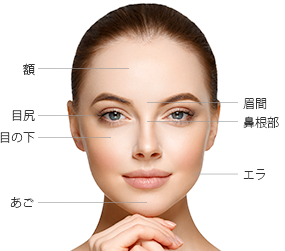
What are Botox injections?
Botox (botulinum toxin type A) is a type of natural protein produced by botulinum bacteria. It weakens the action of the neurotransmitter acetylcholine to reduce muscle movement, and it also helps suppress sweating and sebum production. It has been used for over 30 years to treat conditions such as facial spasms and blepharospasm.
Effects of Botox
- Reduces expression lines: improves wrinkles between the eyebrows, on the forehead, and at the outer corners of the eyes
- Adjusts muscle balance: lifts the corners of the mouth, reduces nasal flare, and corrects eyebrow asymmetry
- Reduces enlarged muscles: improves jawline prominence (smaller face) and slims the calves
- Reduces sweating: improves hyperhidrosis of the underarms and palms
- Reduces sebum: Micro Botox
The effects of Botox begin to appear around 3–4 days after injection and peak in 1–2 weeks. It then lasts for 4–6 months.
When the goal is muscle atrophy, it takes about one month for the muscle to atrophy and for the effect to become apparent.
Improving expression lines
Botox is effective for improving and preventing expression lines and wrinkles.
Botox injections can reduce wrinkles caused by facial movements.
When you smile or frown, the facial muscles contract in areas such as between the eyebrows, the forehead, the outer corners of the eyes, and the nasal root. Repeated wrinkling can cause chronic damage to the dermis, and wrinkles gradually become etched in. By injecting Botox, facial movement is reduced, which not only lessens expression lines but also helps prevent wrinkles from becoming deeply etched.
Etched wrinkles remain
Botox injections improve wrinkles caused by muscle movement, but they are not effective for etched wrinkles that are noticeable even when you are not moving your face. In addition to age-related collagen loss and degeneration, repeated wrinkling from facial muscle movement causes chronic dermal damage, leading to etched wrinkles. In addition to prevention with Botox injections, we recommend combining treatments that increase dermal collagen, such as high-concentration salmon injections (Rejuran S), hyaluronic acid injections, and Dermapen.
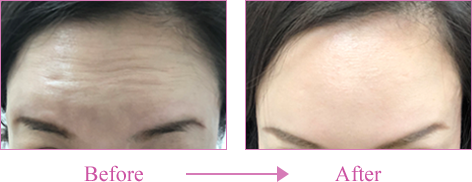
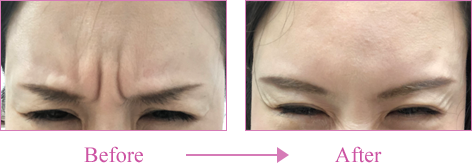
Case photos
Forehead Botox
Glabellar Botox
Adjust muscle movement to balance the face
By adjusting muscle balance, you can correct facial asymmetry and subtly change your facial impression.
- Adjust the shape of the eyebrows
- Slightly lower the outer corners of the eyes to create a softer, downturned-eye look
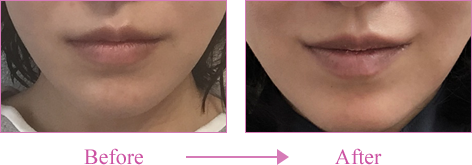
- Slightly lift the corners of the mouth (depressor anguli oris Botox)
- Reduce nasal flare
Case photos
Depressor anguli oris Botox (smile Botox)
Reduce developed muscles
By leveraging the effect of unused muscles becoming slimmer and smaller, it can also help slim developed jaw (masseter) muscles and calves.
When aiming to atrophy muscles, Botox is injected and, after the muscle stops moving for a while, it gradually atrophies and becomes smaller, so it takes about one month for the effect to appear.
Especially for those with significant hypertrophy, a second injection 2–3 months later—before the effects fully wear off—can be more effective. Once the muscles have reduced to some extent, repeat once every 6 months to about 1 year.
Reduce sweating
Reducing sweating can sometimes cause compensatory sweating, where sweating increases in other areas. However, with Botox injections, the treated area is limited, so this is extremely rare compared with procedures such as sympathetic ganglion block.
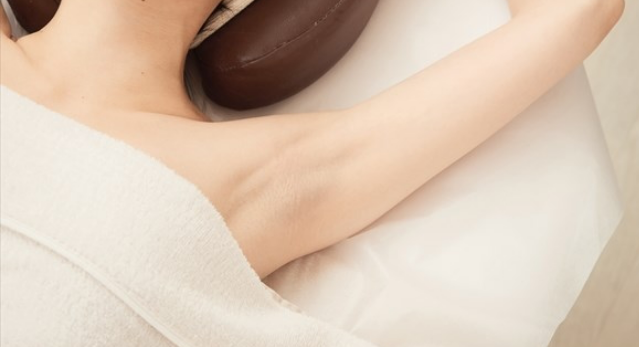
Micro Botox
Micro Botox is a method of injecting very small amounts of Botox evenly into the superficial layers of the skin across areas such as the face line, cheeks, and neck. Unlike standard Botox injections that target the facial expression muscles to significantly reduce movement, Micro Botox weakens only the superficial muscle fibers. This firms the skin, improves fine lines, smooths the skin, and provides a mild lifting effect.
It also suppresses the function of sebaceous and sweat glands, making pores less noticeable and improving oily and acne-prone skin.
Our clinic’s commitment
Choice of products
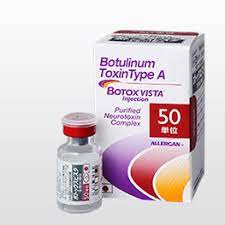
Botox Vista is Allergan’s botulinum toxin product and the only one approved by Japan’s Ministry of Health, Labour and Welfare. It has been widely used worldwide for over 25 years in aesthetic medicine and anti-aging. In Japan, it was approved for manufacture and sale by the Ministry of Health, Labour and Welfare in January 2009, and unlike other unapproved botulinum toxin type A products, its efficacy and safety in Japanese patients have been confirmed.
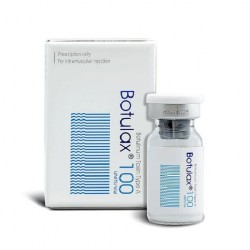
Botulax is a botulinum toxin product by Hugel in Korea. It is approved as a pharmaceutical by the KFDA (Korea Food & Drug Administration). Its effects and duration are comparable to Botox Vista, but it is slightly more affordable, which can help reduce treatment costs.
Natural-looking results
At our clinic, we carefully observe each patient’s wrinkle patterns and combine standard injections into the muscles with micro-injections into the superficial layers of the skin, so that natural facial movement is preserved.
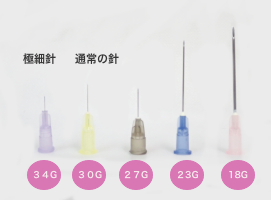
Ultra-fine needles
Free re-injection and fine-tuning within 2 weeks
Because there is no medication (antagonist) that cancels out Botox, if it works too strongly, the only option is to wait for the effect to wear off. Especially for first-time patients who may feel anxious, we may administer a slightly lighter dose to avoid overcorrection. Botox begins to take effect in 3–4 days and becomes fully effective in 1–2 weeks. If you do not feel the effect sufficiently, we offer free re-injection and fine-tuning to the same area within 2 weeks.
About side effects
Side effects of Botox injections
- Narrowing of the double-eyelid crease, ptosis, heaviness in the head, headache: injections to the forehead and glabella
- Worsening under-eye sagging: injections under the eyes
- A stiff-looking smile: injections to the outer corners of the eyes
- An asymmetrical smile: depressor anguli oris and masseter (jaw)
- Difficulty closing the mouth: chin
- Diplopia (double vision): glabella
- Antibodies to Botox may develop and reduce effectiveness: when high doses are administered frequently
Those who require particular caution with Botox injections are patients with ptosis.
Ptosis is a condition in which the muscle that lifts the eyelid is weak. Because the ability to open the eyes is reduced, the frontalis muscle (forehead muscle) is used instead to open the eyes, making forehead wrinkles more noticeable.
If Botox is injected to improve forehead wrinkles in such cases, ptosis may become more noticeable, so Botox treatment is not suitable.
If Botox is injected in patients with significant under-eye sagging, the lack of movement may accentuate the sagging.
Crow’s feet can also give a gentle impression, and stopping movement at the outer corners of the eyes may make the smile look stiff.
At present, there is no antagonist medication for Botox, so if unpleasant side effects occur, you must wait for them to resolve. (In many cases, it improves in about one month.)
The onset and strength of Botox effects vary by individual. At our clinic, especially for first-time patients, we inject a slightly conservative amount, and if the effect is weak, we ask you to return within 2 weeks for re-injection to help prevent side effects from overcorrection.
There are also reports that frequent high-dose treatments may lead to the development of antibodies to Botox, reducing its effectiveness.
Treatment details
| Treatment interval | Once every 3–6 months. Regular treatment is recommended. |
|---|---|
| Treatment time | 5–15 minutes (excluding anesthesia time) |
| Anesthesia | If desired, we will use anesthetic tape or anesthetic cream for those who need it. (Anesthesia fee applies separately.) |
| Downtime | None. In rare cases, bruising may occur, but it can be covered with makeup and typically improves within a few days. |
| Possible side effects | Heaviness in the head, headache, difficulty opening the eyes (worsening ptosis), narrowing of the double-eyelid crease, diplopia, asymmetrical smile |
| Makeup | Needle-mark areas: from the next day. Other areas: makeup can be applied from the same day. |
| Face washing | Allowed from the same day. Please avoid rubbing strongly. |
| Shower | Allowed from the same day. |
| Bathing | Allowed from the same day. |
| Follow-up visits | We may recommend follow-up visits as needed. |
| Recommended combination treatments | Hyaluronic acid, high-concentration salmon injections, Genesis, and thread treatments (tightening threads, Dermaspring Eye, Scaffold) |